Joseph Haydn: The Architect
Joseph Haydn was born into humble circumstances and died as Europe’s most respected composer. He laid the foundations for the classical music that brings us together today.
Article Content
The wheelwright’s son who helped build classical music
We know Mozart as the child prodigy. Beethoven as the titan. But who built the house in which they could flourish?
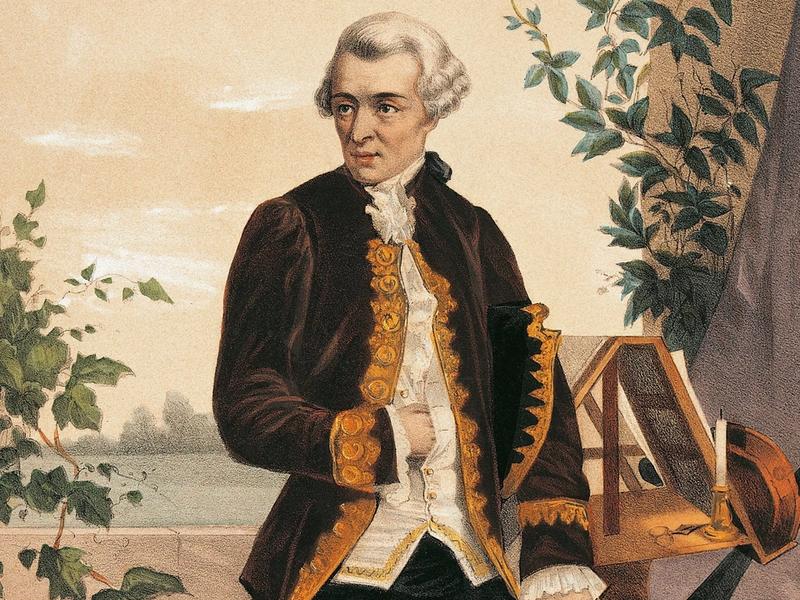
Joseph Haydn was born in 1732 in the small village of Rohrau in Austria. His father was a wheelwright and his mother was a cook. Neither of them could read music, but the family often sang together, and young Joseph showed a strong musical gift from an early age.
At the age of eight, he was discovered and sent to Vienna as a choirboy. It was a hard life: he often went to bed hungry, and his clothes were threadbare. When his voice broke at seventeen, he was thrown out onto the street. With no money. No network.
What followed were several years of sheer survival. Haydn lived in an ice-cold attic room, gave music lessons to children so he could afford food, and taught himself to compose. But he never gave up.
The laboratory where the new music was born
In 1761, Haydn entered the service of the immensely wealthy Esterházy family, first as vice-Kapellmeister and later as Kapellmeister. The palace of Eszterháza lay far off the beaten track on the Hungarian plains, far from Vienna and far from other composers. Quite simply, far from everything. And yet he would remain there for almost thirty years.
For most people, this isolation would have been an obstacle, but for Haydn it was a rare opportunity, one he seized with both hands. He had an entire orchestra at his disposal at all times, and no one was looking over his shoulder. No one was telling him how things should be done.
I was cut off from the world. There was no one nearby to confuse or trouble me, and I was forced to become original.
He certainly became original. Haydn began to play with the audience’s expectations. He would let a theme appear in a new key where no one expected it. He would shift rhythms so that the audience lost its footing, only to bring them safely back again. He would build tension towards a climax, then give them something entirely different.
Music before Haydn was somewhat predictable. Music after him pushed you to the very edge of your seat.
But the most important change happened in the smallest format. The string quartet, with two violins, viola and cello, already existed, but there was nothing especially remarkable about the form. The first violin played the melody. The other three followed along and accompanied it. As expected.
Haydn turned the instrumental hierarchy on its head. In String Quartet Op. 20 No. 2 in C major, the cello opens the first movement with a solo. Not as accompaniment, but in the leading role. In fact, each instrument is given the melody, even the viola.
Four sensible people in conversation with one another.
Goethe understood this. Not one soloist and three extras, but four equal voices in dialogue. They listen. They answer. They interrupt one another and build on what has already happened. The string quartet became a democracy in miniature, in the midst of an age when Enlightenment ideals were challenging absolutism and the structures of the aristocracy.
The string quartet also democratised access to music. Four musicians, four chairs, one room. There was no longer any need for princely orchestras or grand concert halls. Music could now be experienced in homes and drawing rooms. Chamber music had come to stay.
The six string quartets of Opus 20 are as important in music history, and had as radically transformative an effect on the field of musical possibility, as Beethoven’s Third Symphony would have 33 years later.
The music everyone else is founded on
Joseph Haydn is known as “the father of the symphony” and “the father of the string quartet.” Not because he invented them, but because he gave them form, structure and drama.
Mozart was younger than Haydn, but the two became close friends. Mozart credited Haydn with teaching him how to write string quartets. He freely drew on elements of Haydn’s music in his own works.
When the young Beethoven was sent to Vienna in 1792, the mission was clear: he was to “receive Mozart’s spirit from Haydn’s hands.” Things were not always harmonious between them — Beethoven was impatient, while Haydn was more traditional — but Beethoven learned what mattered most: a sense of musical timing and an instinct for orchestration.
Haydn lived long enough to witness Beethoven’s early success. History tells us that he was both proud of, and somewhat bewildered by, his former pupil’s daring innovations. He recognised the genius, even if the young composer’s radical break with tradition went beyond his own taste.
Three of history’s greatest composers crossed paths in Vienna. Together, they developed a musical language against which all later eras are still measured. And it was all built on Haydn’s explorations in the musical laboratory out on the Hungarian plains.
Haydn, yourself and Risør
When a string quartet enter Risør Church, they are continuing something Haydn began 250 years ago: the intimate conversation between equals. Democracy in miniature. Something human distilled into four instruments.
Haydn’s isolation gave rise to creativity, but he was also a humble man. Humility and genius can live side by side. One can take the music seriously without taking oneself too seriously.
Haydn is our composer in focus because this year’s theme is about origins: the moments when something new comes into being. Few have been more important to the origin of what we now call “classical music.”